Imhotep was the architect of the first pyramid, and Egypt later made him a god
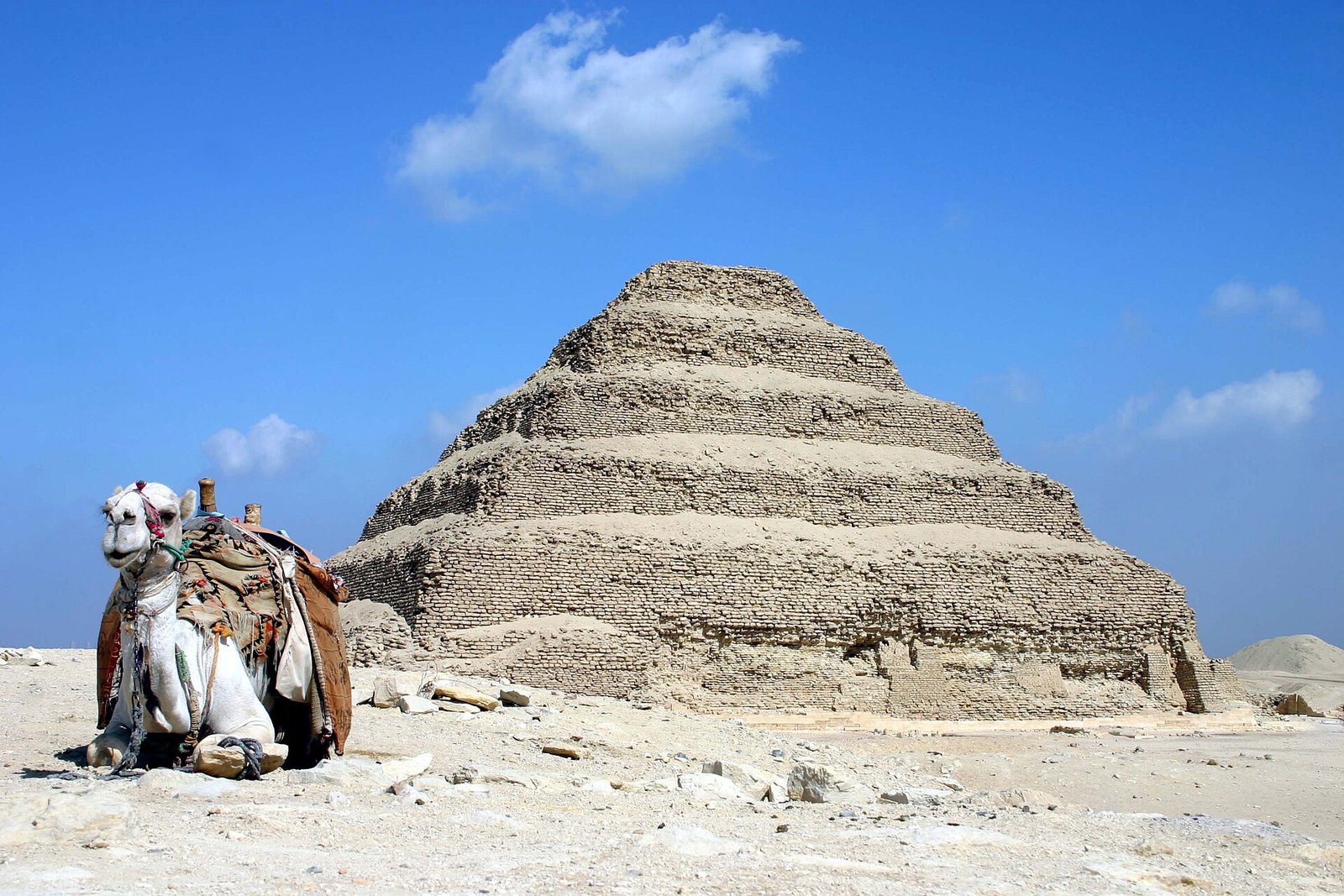
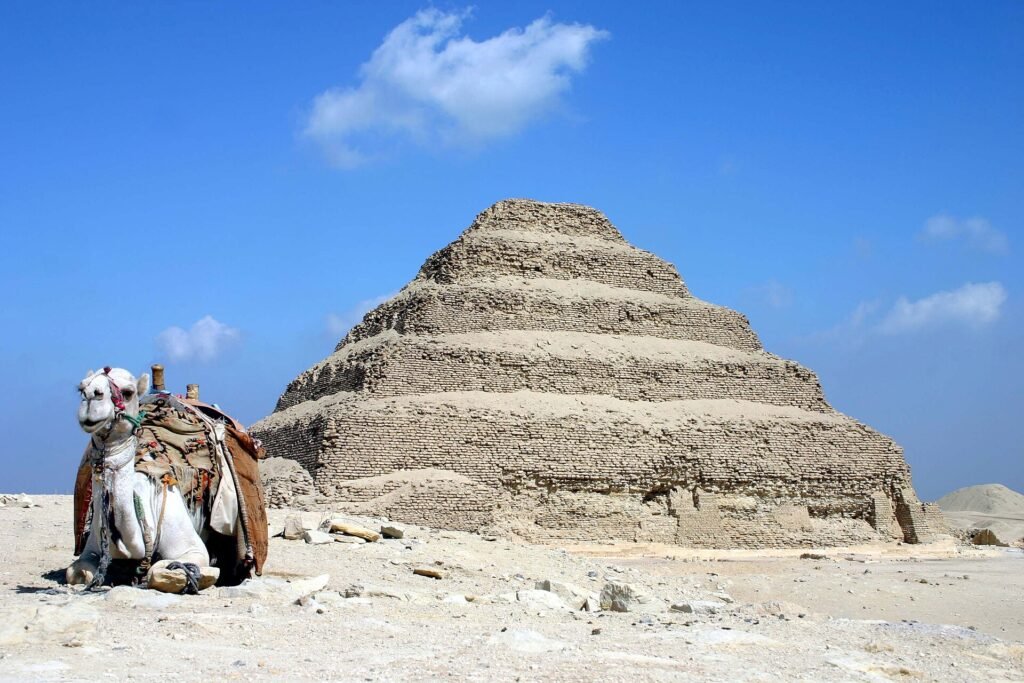
Imhotep was the architect of the first pyramid, and Egypt later made him a god
Imhotep was the vizier and chief builder of King Djoser of the Third Dynasty, around 2650 BC, and the designer of the Step Pyramid of Saqqara, the first large building in the world made of cut stone. We know his name because it was carved on the base of a statue of the king. Later Egyptians remembered him as a sage and healer, and by the Late Period he was worshipped as a god of medicine, the son of Ptah, whom the Greeks identified with Asclepius. His tomb has never been found, and the cursed priest of the Mummy films borrows only his name. Here is the real story, and how to stand in front of his work.
Who Imhotep was, in the terms his own century used
Imhotep served Djoser, the king his contemporaries called Netjerikhet, during the Third Dynasty of the Old Kingdom. That is about a century before the Great Pyramid of Giza. He was not royal. Later tradition gave him a father named Kanefer and a mother named Khereduankh, both ordinary people, and that ordinariness is the point of his story.
His office was vizier, the highest post below the throne. The vizier ran the treasury, the courts, the labor levies and the royal building program, and Imhotep also held the top priestly rank in the sun city of Heliopolis. In modern terms he was prime minister, minister of works and archbishop at once, and then he designed the building that changed Egyptian architecture.
What makes him unusual is that his name survived attached to a specific building, and that the building survived too. Almost every other architect of the Old Kingdom is anonymous. For the wider frame of how the god-kings of the Nile governed, and why a commoner next to the throne mattered, that guide sits alongside this one.
The statue base that saved his name
The single contemporary document about Imhotep is a broken pedestal. In the 1920s, excavators working in the Step Pyramid enclosure found the base of a seated statue of Djoser. The king's name occupies the front. Beside it, in the same official carving, runs a second column of titles that belongs to Imhotep.
They read close to this: seal-bearer of the King of Lower Egypt, first after the King of Upper Egypt, administrator of the great mansion, hereditary noble, greatest of seers of Heliopolis, Imhotep, the builder, the sculptor, the maker of stone vessels. That last trio is what an Egyptologist lingers on. They are craft words, and they say the man beside the king worked stone with his own hands.
Putting a servant's name on a king's monument was not done; kings claimed every building as their own act. That Djoser allowed it tells you what the court thought of Imhotep while he was alive, before any legend grew around him. The pedestal is displayed at the Imhotep Museum by the Saqqara entrance, and it is the first thing we walk you to, so that the rest of the site reads as one man's plan.
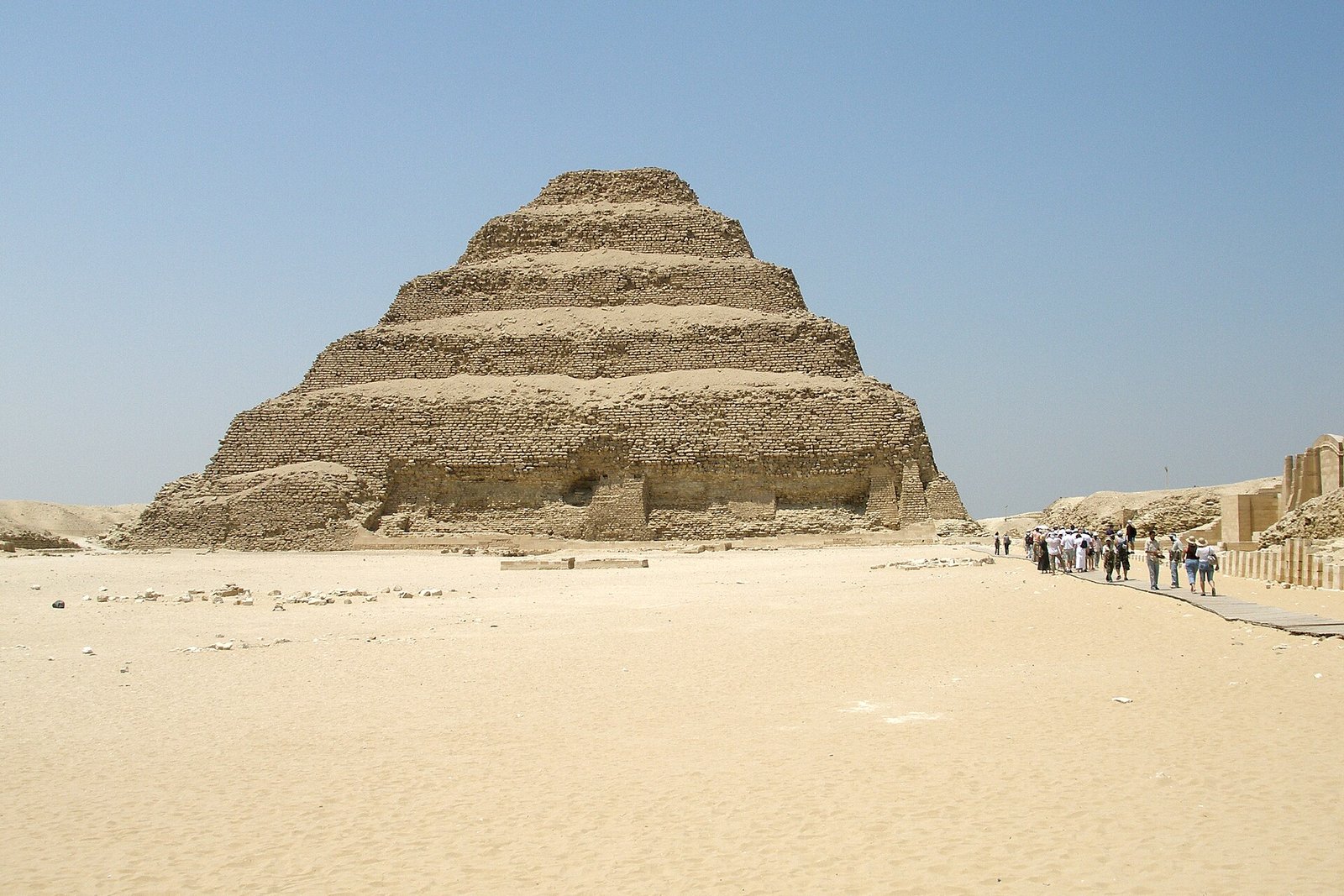
The Step Pyramid, the first stone building of its size on earth
Before Imhotep, an Egyptian king was buried under a mastaba, a flat rectangular bench of sun-dried mud brick over a shaft. Mud brick weathers, and a flat slab does not catch the eye from the valley floor. Imhotep did two new things at once. He built the king's mastaba in cut limestone, and then he kept building, adding a smaller mastaba on top, then another, until six steps rose to about 200 feet, roughly 60 meters.
Archaeologists can read the stages in the masonry. The monument began as a square stone mastaba, was widened twice, became a four-step pyramid, then a six-step pyramid on a larger footprint. The design grew on the job, because nobody had a template for a pyramid. Manetho, the Egyptian historian of the Ptolemaic age, credited Imhotep with inventing the art of building in dressed stone.
The blocks are small, about the size a mud brick gang was used to handling. A century later at Giza the blocks were far larger and the sides smooth, because Saqqara had proved that stone could be quarried, moved, stacked and made to stand for eternity. Our guide to the Step Pyramid of Djoser goes through the monument level by level, including the miles of galleries beneath it, lined in places with blue faience tiles laid to look like reed matting.
Stone pretending to be reeds and wood
The most revealing thing about Imhotep is not the pyramid but the courtyard architecture around it. Walk in through the single real doorway in the enclosure wall and you enter a roofed colonnade of forty columns. They are the oldest large stone columns in existence, and each one is engaged, joined to a short wall behind it, because the builder did not yet trust a stone column to stand alone under a stone roof.
They are carved as bundles of reeds tied together, the same bundles that held up the palaces and shrines of the day. The ceiling of the colonnade is carved as a row of palm logs. Doors in the complex are carved half open, in stone, hinges and all. There was no vocabulary for stone yet, so Imhotep translated the buildings people knew, made of reed, mud and timber, into a material that would last.
In the jubilee court the dummy chapels have curved roofs copied from reed shrines and columns fluted like plant stems. The House of the North has engaged columns in the form of papyrus. The enclosure wall, over a mile around and about 34 feet high, is paneled like a palace facade and pierced by fourteen false doors and one true entrance. Later Egyptian temples kept the plant column and the paneled facade tried here first. That colonnade is the workshop where monumental architecture was invented, and it deserves ten quiet minutes.
Sage, physician and patron of scribes
Nothing survives in Imhotep's own hand. No medical papyrus carries his name as author, and the medical writings sometimes attached to him were copied more than a thousand years after his death. What we have is a reputation that kept growing. By the New Kingdom he was remembered as one of the great sages, quoted alongside other legendary teachers.
Scribes adopted him as their patron and, according to later texts, poured a small libation from the water jar in his honor before starting to write. Statuettes show him as a seated scribe, shaven-headed under a close cap, a papyrus roll open across his lap: not a builder with a plumb line but a reader.
The healing reputation attached itself to the wisdom reputation, since in Egyptian thinking medicine, magic and priestly knowledge sat close together. By the seventh century BC the healer had overtaken the architect in popular memory, and that is the Imhotep who became a god.
From man to god, and the Greek Asclepius connection
Deification of a commoner is nearly unheard of in Egypt. Kings were divine by office. Imhotep is one of a tiny handful of ordinary men who received full cult, and the process finished in the Late Period, when he was declared the son of the creator god Ptah of Memphis, with his human mother Khereduankh honored beside a divine one.
The sick came to his shrines, slept there, and expected the god to appear in a dream with a diagnosis or a remedy that the priests interpreted in the morning. The Greeks called this incubation, and when they settled in Egypt after Alexander they recognized in Imhotep their own healer god Asclepius. In Greek texts he is Imouthes, and his sanctuary at Saqqara was the Asklepieion.
The Ptolemies built for him. A small chapel of Imhotep stands at Philae near Aswan, put up under Ptolemy V, he appears in reliefs at the Ptah temple inside Karnak, and a Ptolemaic shrine on the upper terrace of Hatshepsut's temple honored him alongside Amenhotep son of Hapu, another commoner turned healing god. To place him among the deities you will meet in temple reliefs, our guide to the Egyptian gods and how to recognize them gives you the visual key.
The Saqqara cult and the ibis catacombs
The heart of the cult was Saqqara itself, north of the Step Pyramid, and its physical trace is enormous. In the 1960s the British Egyptologist Walter Bryan Emery went looking for Imhotep's tomb in the Third Dynasty cemetery of North Saqqara. He did not find the tomb. He found the Sacred Animal Necropolis, an underground city of galleries packed with mummified animals.
The largest galleries hold ibises, the bird of Thoth, god of writing and wisdom, with whom Imhotep was closely linked. The birds were mummified, sealed in pottery jars and stacked floor to ceiling in corridors that run for hundreds of yards, and the count runs well past a million. Nearby galleries hold baboons and falcons, and the granite sarcophagi of the Apis bulls lie in the Serapeum a short walk away.
Pilgrims bought an ibis mummy, had it dedicated, and left a written petition asking Imhotep or Thoth for healing, a child or justice. Hundreds were found in the galleries, the clearest voice we have of ordinary Egyptians talking to their god. The Serapeum belongs on any serious visit to Memphis and Saqqara. The animal galleries are not on the normal circuit, but their story is, and a good guide tells it standing on top of them.
The tomb nobody has found
A man this important had a tomb, almost certainly at Saqqara, close to the king he served. It has never been identified. Emery dug for years in the Third Dynasty mastaba field on the northern edge of the plateau. One large unfinished mastaba there has been proposed, but nothing inside it names Imhotep, and the case rests on position and date alone.
The tomb may lie under a later structure, since the Late Period builders of the animal galleries dug straight through older cemeteries, or it was stripped in antiquity and its owner is now unrecognizable. Anyone who points at a hole in the ground and calls it Imhotep's tomb is guessing. Our Egyptologists show you where the search happened and why, which is a better story than a false certainty.
The Mummy villain and the real man have only a name in common
Most Americans meet Imhotep at the movies. In the 1932 film Boris Karloff plays a priest buried alive for trying to raise his beloved from the dead. In the 1999 remake Arnold Vosloo's Imhotep is the high priest of Seti I, cursed and mummified at a fictional city called Hamunaptra. Both are fine adventures, and fiction from the first frame.
The dates alone give it away. Seti I ruled in the Nineteenth Dynasty, around 1290 BC. The real Imhotep served Djoser roughly 1,400 years earlier, further from Seti than Seti is from us. There is no Egyptian record of any curse, punishment or disgrace attached to him. Every ancient text that mentions him is admiring, and the only thing he raised from the ground was a pyramid. If the films are part of why you booked, our page on movies and series about Egypt separates the sets from the sites.
| Claim | The films | The record |
|---|---|---|
| Who he served | Seti I, Nineteenth Dynasty | Djoser, Third Dynasty, about 1,400 years earlier |
| His crime | Murder and forbidden magic | None recorded; every source praises him |
| His burial | Cursed and buried alive at Hamunaptra | Tomb never found; Hamunaptra is invented |
| His afterlife | Walking mummy | Worshipped as a god of healing for centuries |
Where to see Imhotep's work and image today
The Step Pyramid complex at Saqqara
Enter through the true doorway, walk the reed-bundle colonnade, cross the great south court to the pyramid, and circle to the north side to find the serdab, the sealed stone box with two eye holes through which a statue of Djoser stares out forever. The statue in the box is a replica; the original is in the Egyptian Museum. Ask whether the burial shaft under the pyramid is open the week you travel.
The Imhotep Museum
A compact modern museum at the site entrance. The Djoser statue base with Imhotep's titles is here, along with the blue faience tiles from the galleries under the pyramid, reassembled into a doorway, and a room dedicated to Jean-Philippe Lauer, the French architect who spent his career restoring the complex. Forty minutes turns the site from ruins into a plan.
The bronze statuettes in Cairo
The Late Period bronzes of Imhotep as a seated scribe are small and easy to walk past. Several are in the Egyptian Museum on Tahrir Square, where Djoser's seated statue from the serdab has long been shown. Collections are moving between Cairo museums, so we confirm which building holds each piece before your visit.
How Explora Egipto builds the Saqqara day
Saqqara sits about 19 miles south of downtown Cairo, roughly 30 kilometers, under an hour in a private vehicle. We do it as a full day with Memphis and Dahshur, or as a half day when Giza is the same afternoon.
- Early pickup, museum first. We reach Saqqara before the coaches, spend fifteen minutes with the statue base, then walk out while the light is low.
- The complex on foot. Colonnade, south court, serdab, jubilee court. Your guide reads the reed columns and the false doors for you.
- The tombs of the nobles. The mastabas of Ti, Mereruka or Kagemni, with everyday scenes carved at eye level, the part guests remember most and group tours skip.
- Serapeum and the Pyramid of Unas. The bull sarcophagi and the oldest religious texts carved on a burial chamber wall, both a short drive within the site.
- Memphis, then Dahshur. The colossus of Ramesses II at Memphis, then the Bent and Red Pyramids, which close the story Imhotep started.
Saqqara is sand, slopes and almost no shade, so closed shoes, a hat and water are not optional. From May to September we start earlier and finish before the afternoon heat, which regularly passes 95 degrees Fahrenheit, about 35 Celsius. Our vehicles are our own and the guide is a licensed Egyptologist. See the wider set of Cairo excursions for how this day slots next to Giza and the museums.
Frequently asked questions
Who was Imhotep and when did he live?
Imhotep was the vizier and chief builder of King Djoser in the Third Dynasty of the Old Kingdom, around 2650 BC. He was a commoner who rose to the second office in the state and designed the Step Pyramid at Saqqara. His name and titles survive on the base of a statue of Djoser, the only contemporary record of him.
What did Imhotep actually build?
The Step Pyramid of Djoser and its walled enclosure at Saqqara: six stacked stone steps about 200 feet high, an entrance colonnade of forty engaged columns carved like bundled reeds, a jubilee court with dummy chapels, and a paneled enclosure wall with fourteen false doors. It is the first large building of cut stone anywhere.
Why was Imhotep worshipped as a god?
His reputation as a sage and healer grew for two thousand years after his death. Scribes made him their patron, and by the Late Period he was worshipped as a god of medicine and declared the son of Ptah. The sick slept in his shrines hoping for a cure in a dream. Greeks in Egypt identified him with their own healer god Asclepius and called his Saqqara sanctuary the Asklepieion.
Is the Imhotep in The Mummy based on the real one?
Only the name. The films make him a cursed high priest of Seti I buried at a city called Hamunaptra. The real Imhotep lived about 1,400 years before Seti I, no Egyptian source records any crime or curse, and Hamunaptra is invented. Every ancient mention of him is admiring, and he ended as a god of healing, not a monster.
Has the tomb of Imhotep been found?
No. It is assumed to lie at Saqqara near Djoser's complex, and the Egyptologist Walter Bryan Emery searched for it through the 1960s. He found the ibis and baboon catacombs of the Sacred Animal Necropolis instead. A large Third Dynasty mastaba has been suggested as a candidate, but nothing found there carries his name, so the tomb remains one of the open questions of Egyptian archaeology.
Where can I see Imhotep's work and image?
At Saqqara, about 19 miles south of Cairo: the Step Pyramid complex for the architecture, and the Imhotep Museum at the site entrance for the Djoser statue base carrying his titles and the faience tiles from the galleries. Small bronzes of Imhotep as a seated scribe are in the Cairo museums, and we confirm which building holds them before your visit.
Stand in the colonnade where stone architecture began
Tell us your dates, where you are staying in Cairo and how many of you are traveling, and we come back with a Saqqara day built around Imhotep's work, an Egyptologist who can read the columns, our own vehicle at the door, and the rest of your Egypt around it. No prices on this page, ask us for the quote.